Blepharitis leaves your eyelids looking red and crusty. The burning sensation and flaky debris along your lash line can make you question whether you should keep your distance from loved ones.
The good news is that blepharitis is not contagious. You cannot pass this eyelid inflammation directly to another person. While some underlying factors, like bacteria, can spread through sharing items, the condition itself won’t jump from your eyes to someone else’s through normal contact.
What Is Blepharitis?
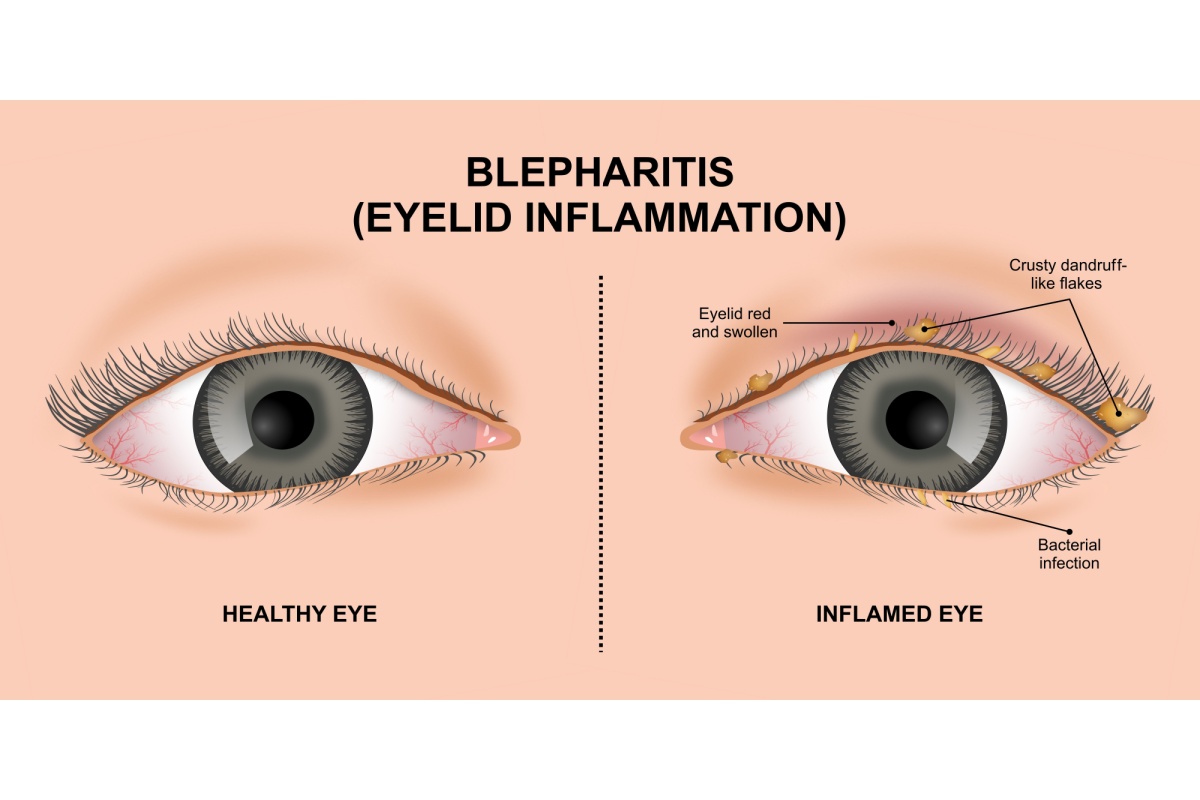
Blepharitis happens when your eyelids become inflamed, typically along the edge where your eyelashes grow. This inflammation affects the tiny oil glands in your eyelids, causing discomfort that can make daily routines challenging.
Symptoms you may experience when blepharitis develops include:
- Red, swollen eyelids
- Itchy or burning sensation
- Crusty debris along the lash line
- Flaky skin around your eyes
- Feeling like something is stuck in your eye
Your eyes might feel gritty when you blink, and you could even notice your eyelids sticking together when you wake up. The symptoms often affect both eyes, though one side may be worse than the other. This condition is often associated with dry eye disease, as both can cause irritation.
Common Factors That Lead to Blepharitis
Blocked oil glands in your eyelids are the most common cause of blepharitis. These glands normally produce oils that keep your tears from evaporating too quickly, but when they become clogged, inflammation develops around the blockage.
Bacteria naturally live on your eyelids, but sometimes they multiply beyond normal levels. Staphylococcus bacteria, which are usually harmless, can overpopulate and contribute to blepharitis by creating irritation along your lash line.
Skin conditions such as seborrheic dermatitis can affect your eyelids and cause the flaky, irritated symptoms you associate with blepharitis. If you notice dandruff or scaly patches on your scalp or face, this condition may also affect your eyelids.
Other factors can include allergic reactions to makeup, skincare products, or environmental allergens that inflame your eyelids. Poor eyelid hygiene, like sleeping in makeup or not cleaning your eyelid area properly, allows debris and bacteria to accumulate along your lash line.
These factors can also contribute to broader dry eye conditions that affect your overall comfort.
Rosacea
Rosacea, a skin condition that causes facial redness and inflammation, can extend to your eyelids and trigger blepharitis. People with rosacea often develop ocular rosacea, where the same inflammatory process affects the meibomian glands in your eyelids, leading to the red, irritated symptoms of blepharitis.
Demodex Mites
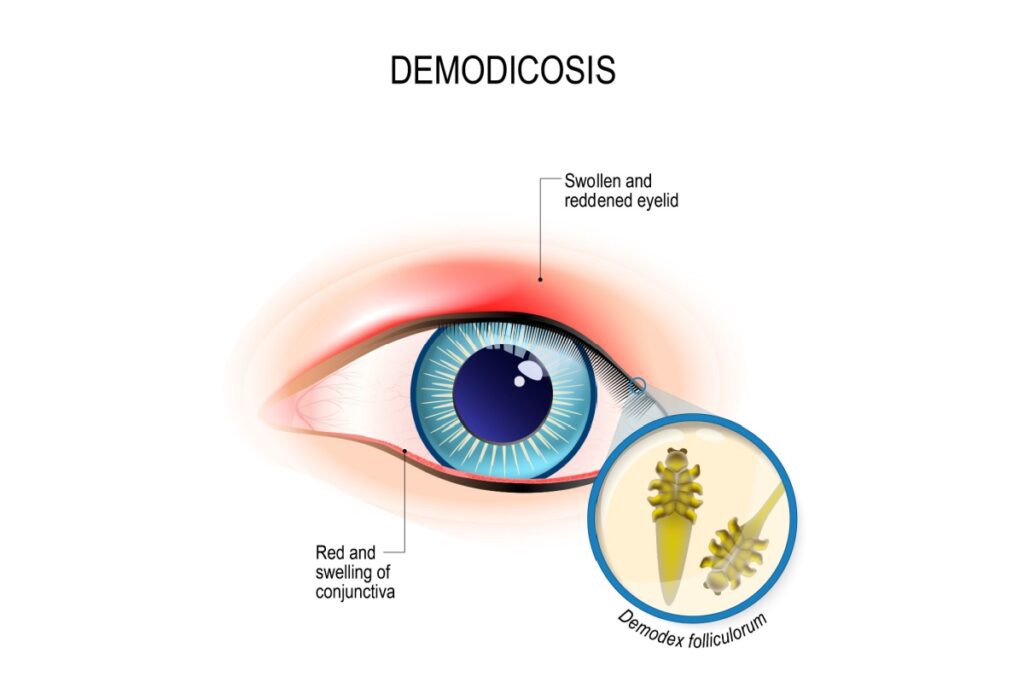
Tiny mites called Demodex naturally live in your hair follicles, including those around your eyelashes. When these mites multiply excessively, they can worsen blepharitis symptoms by clogging your oil glands and creating more irritation.
These mites don’t easily transfer between people through casual contact. Your family members likely have a normal population of these mites, which only becomes problematic when they overgrow.
The Truth About Blepharitis Transmission
Many people worry about spreading blepharitis to their children or partners because the red, inflamed appearance can resemble contagious eye infections, such as pink eye.
The condition stems from issues with your eyelid structure and oil gland function. Blocked or inflamed glands create the symptoms you experience, rather than an infectious agent that can move between people.
However, some factors that contribute to blepharitis can spread through shared personal items due to bacteria. Bacteria naturally live on your skin and eyelids, but sometimes they multiply beyond normal levels, worsening blepharitis symptoms. These bacteria don’t typically cause the initial inflammation, but they can worsen your condition.
Sharing washcloths, towels, or eye makeup can transfer bacteria between people. While this won’t give someone else blepharitis, it may introduce bacteria that could contribute to their own eyelid problems if they’re already prone to inflammation.
How to Prevent Blepharitis From Getting Worse
Daily eyelid cleaning helps remove the buildup of oils, dead skin, and debris that worsens blepharitis. Use a gentle, warm washcloth to soften any crusty material, then clean along your lash line with specialized eyelid cleansers.
Several hygiene habits can help manage your symptoms:
- Replace eye makeup regularly
- Wash your hands before touching your eyes
- Use clean towels and pillowcases
- Remove makeup completely each night
Warm compresses applied for 10 to 15 minutes can help melt blocked oils in your eyelid glands. Microwaveable moist heat eye masks (e.g. Bruder mask) designed for this purpose maintain consistent warmth throughout treatment and are more effective than washcloths, which cool down too quickly. If using a warm washcloth, you’ll need to rewarm it several times during the treatment.
After heating, perform blinking exercises to help expel the softened oils from your glands. Gently squeeze your eyes closed completely (without straining), hold for 2 seconds, then open your eyes fully. Repeat this cycle 10-15 times to encourage the warmed oils to flow from the glands.
When to See Your Optometrist
Home care works well for mild blepharitis, but some cases require professional care. If your symptoms persist despite consistent cleaning, your optometrist can identify underlying factors you might not recognize.
Certain symptoms need immediate attention:
- Pain that doesn’t improve with treatment
- Changes in your vision
- Severe swelling or discharge
- Symptoms that keep coming back
An optometrist can examine your eyelids under magnification to identify specific problems. We might find Demodex mites, poor oil gland function, or detect other conditions affecting your eyelids. We can also rule out other conditions that you may confuse with blepharitis.
Treatment options can include prescription medications, specialized cleaning products, or procedures to open blocked glands.
How to Live with Blepharitis
Blepharitis often follows a pattern of flare-ups and calm periods. You might have weeks or months with minimal symptoms, followed by periods when your eyelids become red and uncomfortable again.
When symptoms return, resuming your cleaning routine and warm compresses usually helps relieve symptoms. Some people find that stress, certain foods, or seasonal changes seem to worsen their blepharitis, though individual patterns vary.
Most people with chronic blepharitis learn to manage their symptoms with consistent care. While the condition might not disappear completely, proper management can keep it from significantly impacting your life.
Don’t Let Your Symptoms Take Over Your Life
You don’t need to worry about spreading blepharitis to your family members through normal daily contact. Hugging your children, sharing meals, or sleeping next to your partner shouldn’t give them eyelid inflammation.
If you’re experiencing persistent eyelid irritation or want to learn more about managing blepharitis, Cowichan Eyecare on Vancouver Island can help you develop a treatment plan that fits your lifestyle. Contact our team to schedule an eye exam and discuss your symptoms with professionals who understand how to address ongoing eyelid concerns.