When your central vision starts to become blurry, or you notice straight lines looking wavy, you might be experiencing macular degeneration, a condition that affects millions of people over 50. Cowichan Eyecare helps families understand these important differences through comprehensive eye exams.
The main difference between wet and dry macular degeneration lies in how quickly vision changes and which treatment options can help slow progression. Dry type develops slowly over years, while wet type can cause rapid vision loss within weeks or months.
What Is Macular Degeneration & How Does It Affect Your Vision?
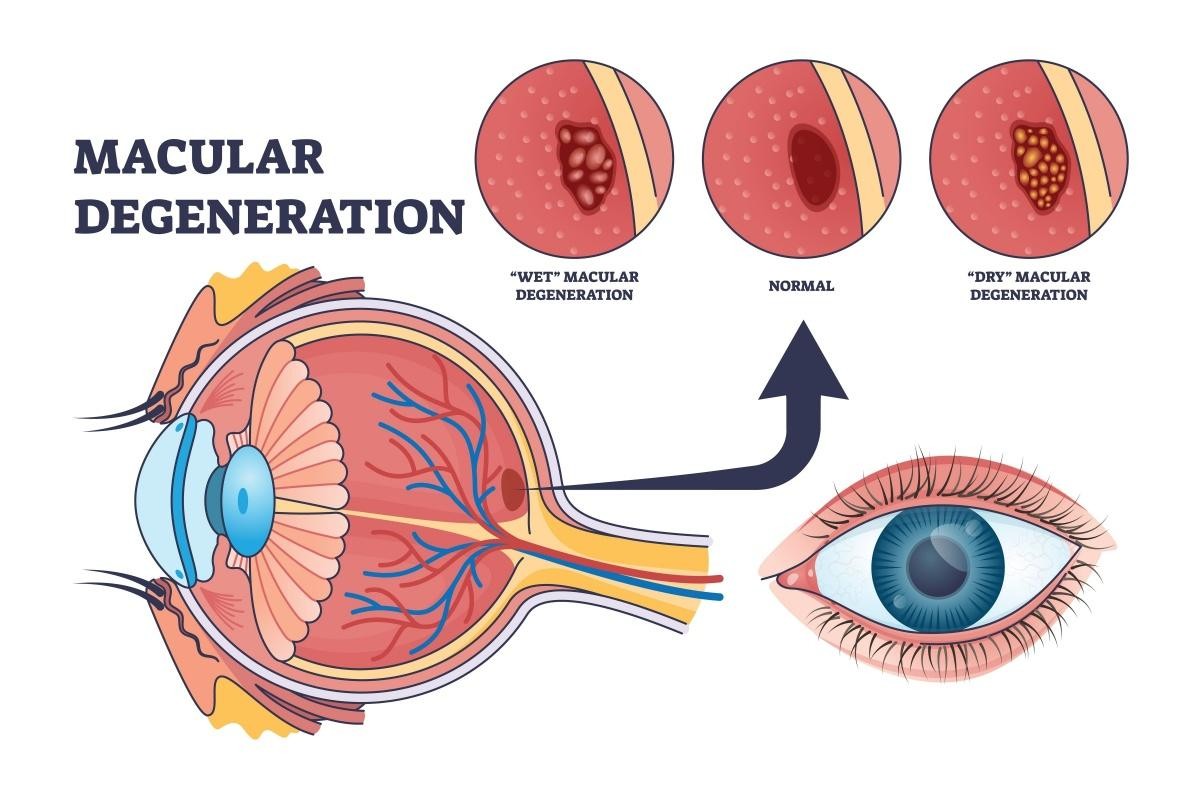
Macular degeneration affects the macula, a small but important part of your retina that’s responsible for sharp, central vision. Think of it as the “detail center” of your eye. It’s what allows you to read, recognize faces, and see fine details clearly.
When the macula begins to deteriorate, which can impair your central vision while typically leaving your peripheral vision intact. You can still move around safely, but tasks requiring detailed vision become more challenging.
The condition is one of the leading forms of vision loss in people over 50, but it rarely leads to complete blindness. Many people continue living fulfilling lives with macular degeneration, especially when it’s caught early and managed properly. Age-related macular degeneration affects central vision while peripheral sight remains intact.
Dry Macular Degeneration: The Most Common Type
About 85% to 90% of people with macular degeneration have the dry type. This form develops gradually and progresses more slowly than wet macular degeneration.
How Dry Macular Degeneration Develops
With dry macular degeneration, tiny yellow deposits called drusen start forming under your retina. These deposits build up over time as waste products that your eyes can’t clear away efficiently.
As more drusen accumulate, the retinal tissue above them begins to thin and break down. This process happens so slowly that you might not notice vision changes for years.
Signs You Might Notice
The early signs of dry macular degeneration often develop so gradually that you adapt without realizing your vision has changed. You might find yourself holding books farther away or turning on extra lights.
As the condition progresses, you may notice blurry areas in your central vision that make reading or recognizing faces more difficult. Colours might also appear less bright or vivid than they used to.
MacuMira therapy and other treatments, including red light therapy (photobiomodulation), can help manage dry macular degeneration when detected early. Arunalight is a red light device designed specifically for ocular health that is showing promise as a form of treatment for AMD.
It’s also worth noting that while injectable treatments for geographic atrophy — an advanced stage of dry macular degeneration — exist, they are not yet available in Canada.
Wet Macular Degeneration: Less Common But More Serious
Wet macular degeneration affects only about 10% to 15% of people with this condition, but it accounts for most cases of serious vision loss. This type requires immediate attention when symptoms appear.
What Happens with Wet Type
In wet macular degeneration, abnormal blood vessels start growing underneath your retina. These new vessels are fragile and leak blood or fluid into the surrounding tissue, which often leads to scar tissue formation..
When fluid accumulates under your retina, it can shift the retina or cause it to bulge. This distortion affects your central vision quickly and can lead to significant vision loss within weeks if not treated promptly.

Warning Signs to Watch For
The symptoms of wet macular degeneration often appear suddenly and worsen rapidly. Straight lines, such as doorframes or telephone poles, might appear wavy or bent—this distortion is one of the earliest warning signs.
You might also notice dark or empty spots appearing in your central vision. These changes can happen over days or weeks rather than the gradual progression seen with dry type.
Lifestyle changes can help reduce the risk of developing macular degeneration or slow its progression.
Key Differences Between Wet & Dry Types
The speed at which your vision changes provides the clearest difference between these two types. Dry macular degeneration progresses slowly over years, while the wet type can affect vision noticeably within weeks.
Treatment options also differ significantly. Currently, no treatments can reverse dry macular degeneration, though certain supplements may help slow its progression. Wet type responds well to injectable treatments that can stabilize or even improve vision when started early.
Learning about the differences between macular degeneration and other eye conditions helps you recognize symptoms early and seek appropriate treatment.
The Importance of Regular Eye Exams
Regular eye exams play a key role in detecting macular degeneration before you notice symptoms. Early detection allows for better monitoring and treatment when options become available.
Early Detection Makes a Difference
During comprehensive eye exams, your eye doctor can spot the early signs of macular degeneration using specialized equipment and tests. At our Macular Wellness Centre in Langford, we offer dark adaptation testing, which can detect AMD even before signs appear during a routine exam — making it one of the earliest detection tools available for this condition. Early detection helps track any changes over time and ensures treatment can begin as soon as it’s needed.
When wet macular degeneration develops, starting treatment quickly can help preserve more of your vision. Regular monitoring also helps you adapt to any vision changes with appropriate support and tools.
Comprehensive eye exams are important for detecting eye diseases and other serious health conditions in all age groups.
Protect Your Vision with Cowichan Eyecare
Macular degeneration doesn’t have to limit your quality of life when it’s detected and managed early. Our team at Cowichan Eyecare provides comprehensive eye exams and ongoing monitoring to help protect your vision and catch changes as soon as possible.
If you’re noticing changes in your vision or it’s time for your next eye exam, professional care can make all the difference. Cowichan Eyecare proudly supports patients across Vancouver Island with personalized eye care focused on long-term vision health. Schedule your eye exam today to help maintain clear, healthy vision for years to come.