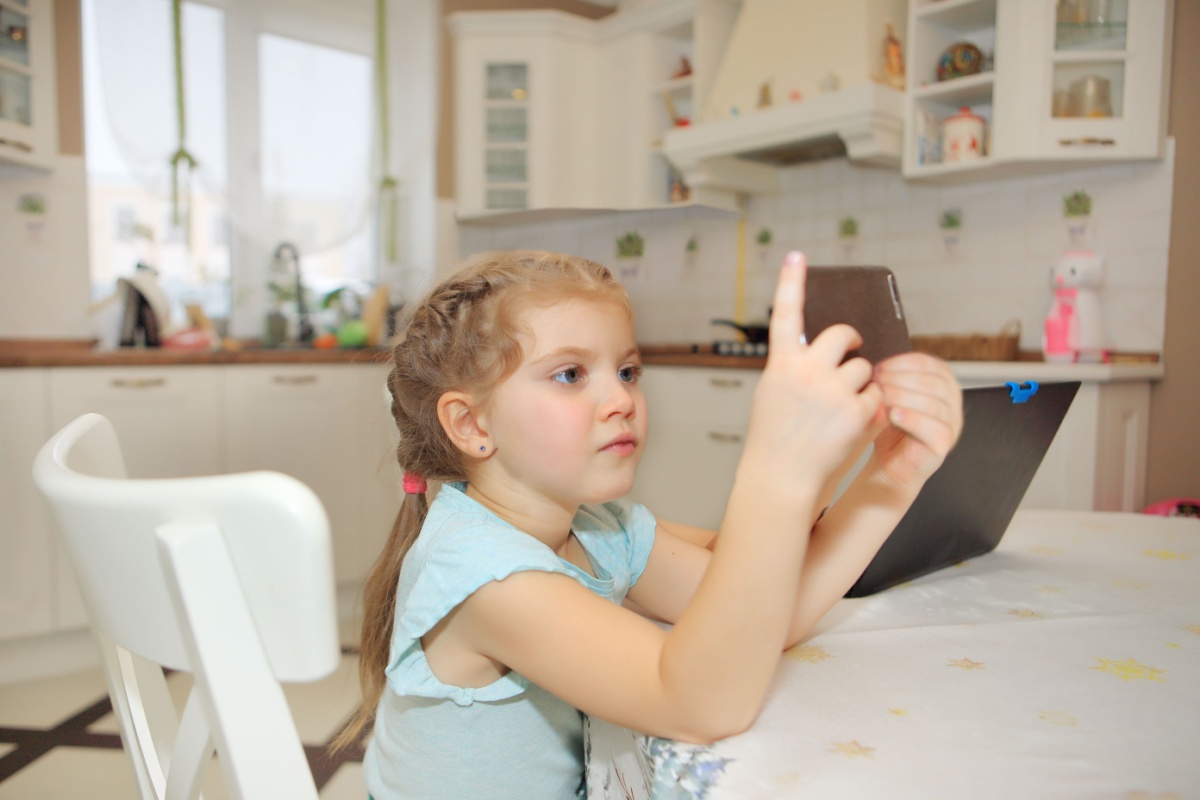
In today’s world, screens are a big part of family life. From schoolwork on a tablet to video games on a TV, children use digital devices every day. It raises a common concern about how healthy all this screen time is for developing eyes.
While screen time does not typically cause permanent harm to eyesight, it can lead to temporary discomfort like digital eye strain or dry eyes, and it may be a factor in myopia.
How Screens Impact Your Child’s Eyes
When your child focuses on a screen for a long time, their eyes work hard. This can lead to a few common issues. Unlike a book, the light and glare from a screen can increase the effort required for the eyes to focus properly.
That discomfort felt after looking at a screen for too long is often called computer vision syndrome, or digital eye strain. It happens because the eyes must constantly focus and refocus while processing information from a bright, pixelated display. This extra work can make their eyes feel tired and achy.
You may notice your child blinks less when they are focused on a screen. Fewer blinks mean fewer tears to keep the eye’s surface moist. This can cause redness and an uncomfortable, scratchy feeling, which are common symptoms of dry eye that may make them want to rub their eyes.
How Much Screen Time Is Recommended?
The Canadian Association of Optometrists and Canadian Ophthalmological Society provide clear guidelines for screen time based on your child’s age. These recommendations focus on recreational screen time, recognizing that school requirements may add additional screen exposure.
For infants and toddlers (0-2 years), no screen time is recommended, with the possible exception of live video-chatting, such as Skype or FaceTime, with parental support due to its potential for social development.
Preschool children (2-5 years) should have no more than 1 hour per day of age-appropriate, educational, and supervised screen viewing.
For school-age children (5-18 years), the ideal limit is no more than 2 hours per day of recreational screen time. Individual screen time plans should be based on your child’s development and needs.
High screen time use in children is associated with a risk for obesity, poorer school performance, poorer sleep quality, and delays in critical cognition, learning, and social skills in younger children. Beyond limiting total screen time, how your child uses screens also matters for their eye health and overall well-being.
Notice These Signs of Eye Strain
Children may not always tell you their eyes feel tired or sore. Instead, you might observe certain behaviours that indicate visual discomfort. Pay attention if your child shows any of the following signs after screen use:
- Rubbing their eyes often
- Complaints of headaches or tired eyes
- Squinting or tilting their head to see the screen
- Watery or dry, red eyes
- Difficulty concentrating on schoolwork
- Increased sensitivity to light
Simple Habits for Healthy Eyes and Screen Use
You can help protect your child’s eyes by encouraging a few simple and healthy habits. These small adjustments can make a big difference in reducing eye strain and promoting visual comfort during and after screen time:
- Follow the 20-20-20 Rule: Remind your child to take a break every 20 minutes to look at something about 20 feet away for at least 20 seconds.
- Set Up an Eye-Friendly Viewing Area: For computers, place the top of the display at your child’s eye level, and then allow them to move the screen down into a comfortable viewing position as needed. The screen should be about 50 to 65 centimetres away from their eyes. Make sure there is no glare or reflection on the screen, and use soft lighting in the room to reduce eye strain.
- Encourage Frequent Breaks: Set timers to remind your child to get up, stretch, and do something that does not involve a screen for a few minutes every hour.
- Limit Screen Time Before Bed: Reduce screen use for at least 1 hour before your child goes to sleep to help their body wind down. Screens in the bedroom are not recommended, as they can interfere with healthy sleep habits.
- Encourage Outdoor Activity Over Screen Time: Increased prevalence and progression of myopia (nearsightedness) has been linked with children spending fewer hours outdoors. Prioritize outdoor play and activities whenever possible to support your child’s eye health.
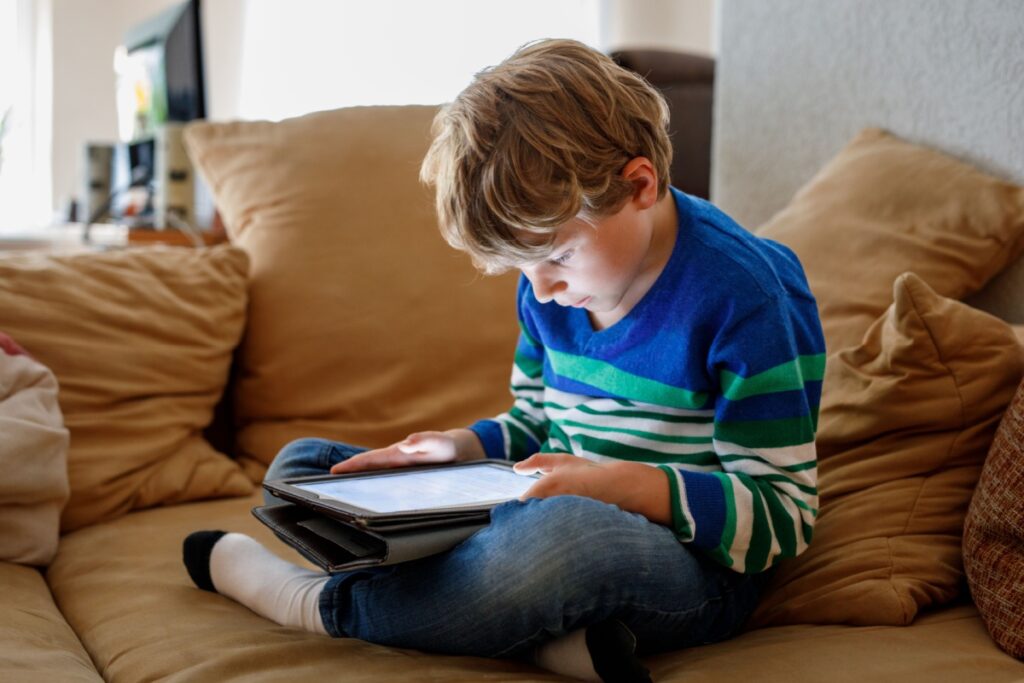
Blue Light, Screens and Your Child’s Sleep
The light from screens, often called blue light, can affect more than just your child’s eyes. It can also disrupt their natural sleep cycle. Your brain connects blue light with daytime, which can make it harder for your child to fall asleep after using a screen at night.
Blue light can signal to the brain that it’s time to be awake. When your child uses a screen close to bedtime, this signal can delay the body’s release of melatonin, a hormone that helps with sleep. This can lead to difficulty falling asleep and a restless night.
You can encourage a better night’s rest by creating a screen-free wind-down period before bed. You can help your child relax by replacing tablets or phones with activities like reading a physical book or listening to quiet music together.
Why Your Child Needs a Yearly Eye Exam
Regular eye exams are a key part of your child’s overall health care. An eye exam checks for clear vision, but it also provides a complete assessment of your child’s eye health, tracking development and spotting potential issues early.
A comprehensive eye exam establishes a baseline for your child’s vision. This allows your optometrist to monitor for changes over time, especially with the increased use of digital devices in school and at home. It helps create a clear picture of their eye health journey.
During an exam, your optometrist can check eye alignment, muscle coordination, and the overall health of the eye structure. It’s a proactive way to support your child’s visual skills as they grow and to help their eyes work together correctly.
Schedule Your Child’s Eye Exam Today
A yearly visit helps you get personalized advice and can answer your questions about your child’s eye health.
By building healthy screen habits and scheduling regular check-ups, you can support your child’s visual comfort as they learn and grow. Our team at Cowichan Eyecare is here to help your family navigate the digital world with clear and comfortable vision.
Book an appointment today at one of our Vancouver Island locations for your child’s comprehensive eye exam.