
Key Takeaways
- High blood sugar can damage the tiny blood vessels in your eyes over time.
- Early diabetic eye changes often show no symptoms, so yearly exams matter.
- Blurry vision, floaters, and faded colours can signal a problem worth checking.
- Steady blood sugar, blood pressure, and cholesterol help protect your sight.
- A dilated exam can catch issues before you notice changes yourself.
How Diabetes and Your Eyes Are Connected
Your eyes rely on a network of small blood vessels to stay healthy. When your blood sugar runs high for long stretches, your blood vessels start to weaken, leak, and swell. This damage can build quietly, often before you even notice symptoms.
The longer you live with diabetes, the more your risk increases. Regular diabetic eye exams can help track these changes, so that our team at Cowichan Eyecare can spot potential problems in their early stages.
Early Signs and Symptoms to Watch For
Diabetic vision changes include:
- Blurry vision
- Blank or dark spots in your vision
- Faded, washed out colours
- Vision loss
These shifts can be subtle. You might just think that you’re tired,or that you need a new prescription—and sometimes, that’s true! Other times, however, your retina needs help.
When Symptoms Show Up Suddenly
Some changes develop quickly and require prompt attention. If your vision shifts suddenly, don’t wait it out—seek emergency eye care. Symptoms that require immediate action include:
- Flashes of light at the edges of your sight
- Blank or dark areas that appear in your view
- Other sudden changes to your vision
Common Diabetes-Related Eye Conditions
Diabetic Retinopathy
This is the most common eye condition linked to diabetes. It happens when weak blood vessels start to leak fluid and blood into the retina, the light-sensitive layer at the back of your eye. The early stages of diabetic retinopathy often don’t have any symptoms.
Macular Swelling, Cataracts and Glaucoma
Diabetes can affect more than just the retina. Other issues related to diabetes include:
- Fluid buildup in the macula, which can distort your central vision and make straight lines look bent
- Cloudy lenses, or cataracts, which can appear at younger ages than usual
- Rising pressure inside the eye, which can slowly damage the optic nerve, causing glaucoma
How Eye Exams Catch Problems Early
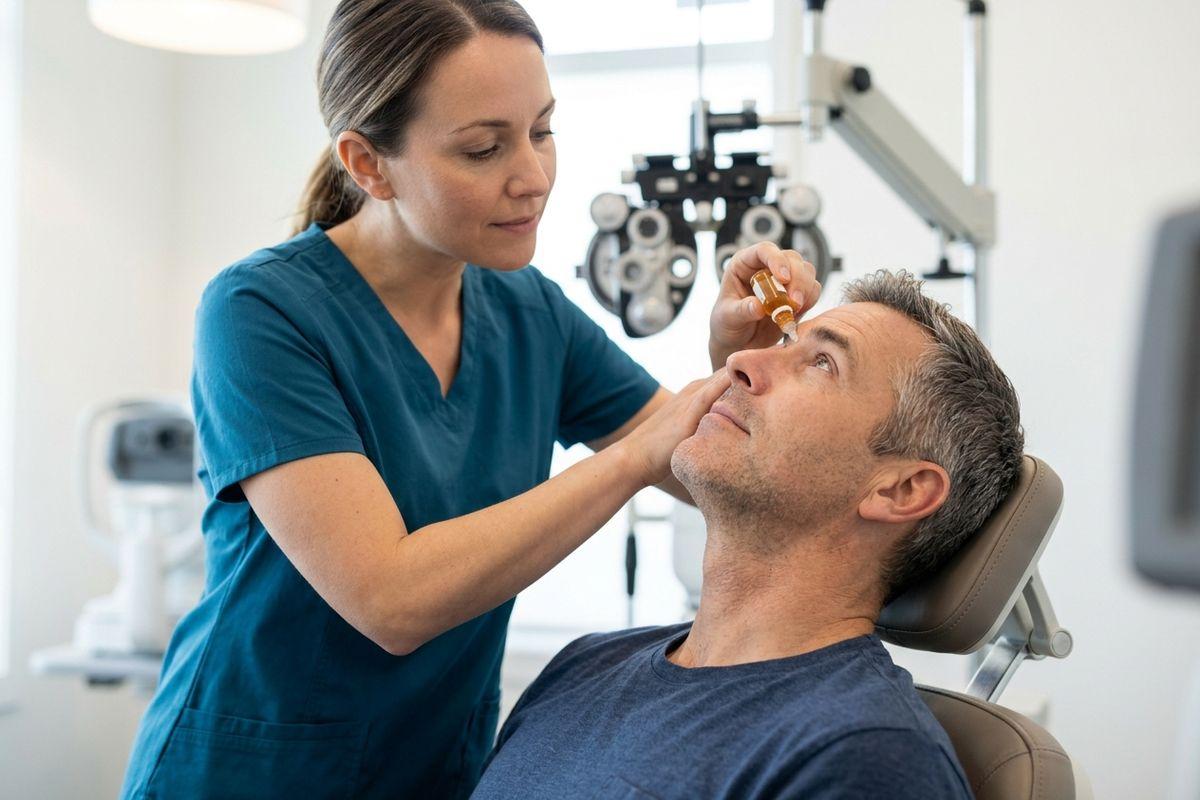
A diabetic eye exam goes deeper than a vision check. We use drops to dilate your eyes, so that we can get a better view of the structures at the back of your eye.
- A dilated exam lets our team see your retina and blood vessels clearly
- A yearly exam is recommended for anyone living with diabetes
- Early detection means earlier treatment options
During your visit, your optometrist will use diagnostic techniques like optical coherence tomography to map out your eyes and look for potential problems. They’ll also assess your vision and look for signs of swelling, leaks, or new blood vessel growth.
Steps to Protect Your Vision
You have real influence over how diabetes affects your eyes. The habits that support your blood sugar also support your sight, and small steps add up over the years.
- Manage your blood sugar every day with steady meals and your care plan
- Keep blood pressure and cholesterol in check
- Stay active and step away from tobacco, which raises eye disease risk
Book With a Local Optometrist
Care close to home makes it easier to keep that yearly appointment. Cowichan Eyecare offers exams for families and every age across the region.
- Visit a Langford optometrist, Duncan optometrist, Cobble Hill optometrist, Lake Cowichan optometrist, or Chemainus optometrist location
- Schedule family-friendly exams for kids, parents, and grandparents alike
Diabetes can affect your vision, but you don’t have to face it on your own. Book your diabetic eye exam with our team at Cowichan Eyecare and give your eyes the steady attention they deserve.