Key Takeaways
- Astigmatism happens when your cornea or lens curves unevenly, which can blur vision at all distances.
- It’s a common eye shape difference, not a disease.
- Signs include blurry vision, eyestrain, headaches, and trouble seeing at night.
- Kids often don’t notice blurry vision, so regular screenings help catch it early.
- Glasses, contact lenses, and other options can correct astigmatism.
Maybe you’ve noticed that street signs look fuzzy no matter how close you get, or that lights seem to smear at night. That kind of blur can point to astigmatism, and our team at Cowichan Eyecare can help.
Astigmatism is a common eye shape difference where the cornea or lens curves unevenly, so light doesn’t focus on a single point, and vision can look blurry at both near and far distances.
A healthy eye tends to have a round curve, like a basketball. With astigmatism, the curve looks more like the back of a spoon, longer in one direction than the other. That small change is enough to make print and faces look soft around the edges. It isn’t a disease, and it’s something an eye doctor can measure and correct.
Signs and Symptoms to Watch For
The clues can be easy to brush off. You might blame tired eyes or a long day at the screen when the real reason is the shape of your eye.
Watch for these signs:
- Blurred or distorted vision at any distance
- Eyestrain, headaches, or frequent squinting
- Trouble seeing clearly at night, especially with glare from headlights
What It Looks Like for Kids
Children rarely say their vision is blurry. They think the way they see is the way everyone sees.
A child with astigmatism might sit close to the television, lose their place while reading, or avoid homework because it feels hard. Regular screenings can catch these changes early, often before they affect learning or how a child feels about school.
What Causes Astigmatism?
Most of the time, astigmatism comes down to the natural shape you were born with. An uneven curve in the cornea or lens is the main reason light scatters instead of landing in one spot.
It often runs in families, so if a parent has it, a child may have it too. In some cases, an eye injury or eye surgery can change the curve of the cornea and lead to astigmatism as well.
When Astigmatism Changes Over Time
Your eyes can shift throughout life, and astigmatism can change with them.
A prescription that worked 5 years ago might not feel right today. In less common situations, a condition called keratoconus can gradually thin and reshape the cornea, which changes vision more noticeably. Regular exams help our team track these shifts and adjust your care.

How Our Team Checks for Astigmatism
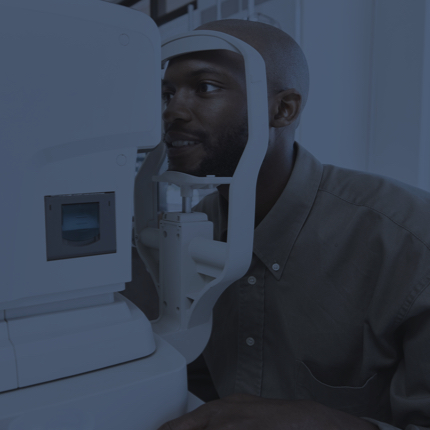
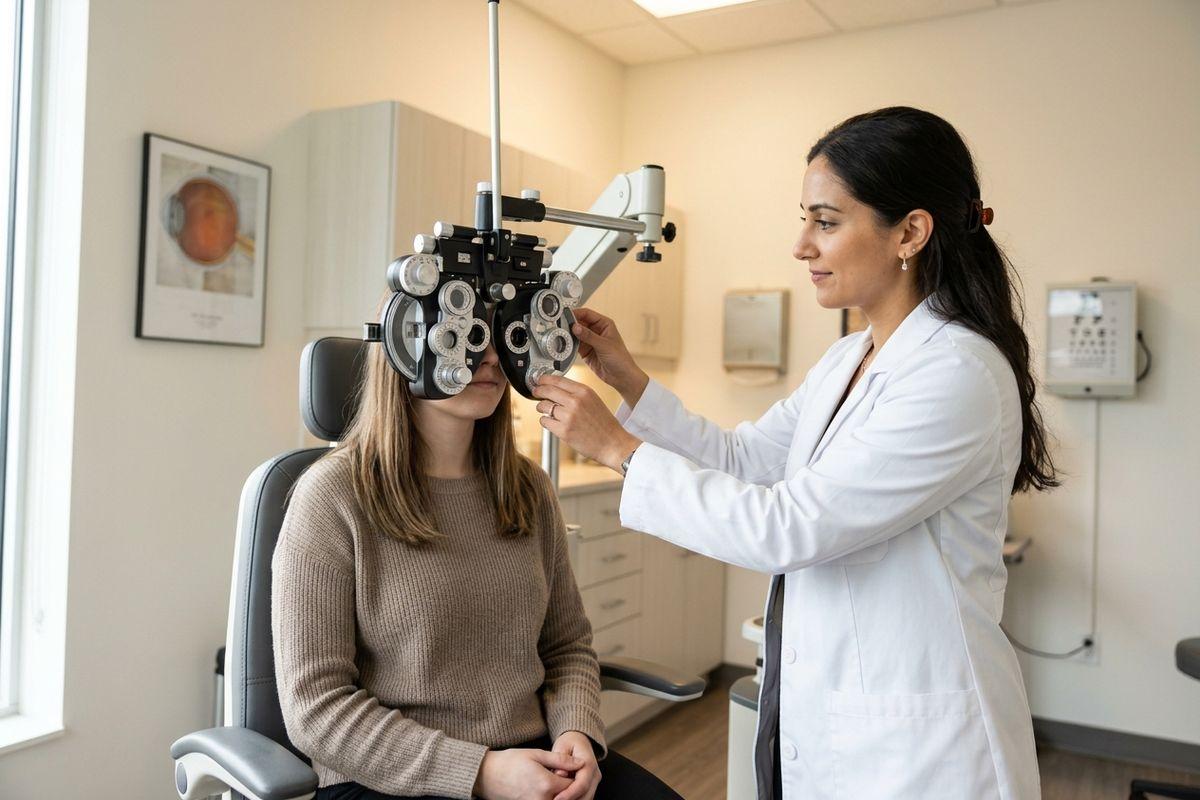
The exam is simple and comfortable. Your eye doctor measures how your eyes focus light and how your cornea curves. From there, they can tell whether astigmatism is present and how strong it is.
Family exams once a year work well for most people, though children and older adults may benefit from checks on a schedule our team suggests. Booking exams around back-to-school time or a birthday can make it easier to remember.
Ways to Correct Astigmatism
Good news, astigmatism responds well to correction, and you have more than one path to clearer vision:
- Glasses fitted for your eyes can focus the blur and reduce eyestrain during reading, driving, and screen time.
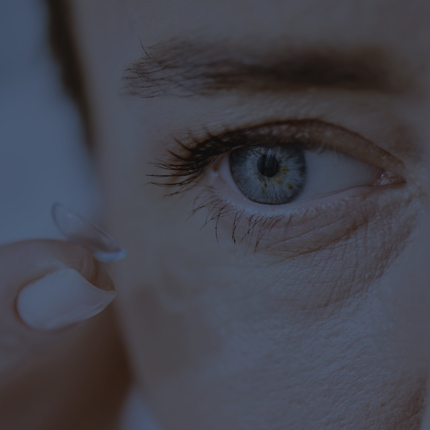
- Contact lenses shaped for astigmatism, called toric lenses, give you clear vision for daily wear without frames.
- Laser surgery or orthokeratology (ortho-k), a lens worn overnight, can reshape how light enters the eye for people who qualify.
The right choice depends on your eyes, your daily routine, and what feels comfortable to you.
Clearer Vision Starts with an Eye Exam
Astigmatism is common and easy to check for. The sooner you know what’s going on, the sooner you can enjoy sharper vision at work, at home, and on the road.
Book an eye exam with Cowichan Eyecare today, and let our team help you and your family see more comfortably.