
Key Takeaways
- Wash and dry your hands before you touch a lens, every single time.
- Use fresh sterile solution, never tap water, saliva, or yesterday’s leftovers.
- Rinse your case daily, air-dry it upside down, and swap it every 3 months.
- Take lenses out before showers, pools, hot tubs, and sleep.
- Redness, blurred vision, or a gritty feeling means it’s time to remove your lenses.
- Yearly eye exams help keep your contact lens prescription and fit on track.
You’re running late, you need to put your contact lenses in, and washing your hands feels like one step too many. So you pop it in and head out the door. Too many people take this shortcut, and it’s one of the quickest ways to move germs from your fingers onto the surface of your eye.
Many contact lens problems trace back to a handful of small habits, including skipping handwashing, reusing solution, not cleaning the case, and wearing lenses longer than they should be. The good news is that each one is simple to correct, and our team at Cowichan Eyecare can review your routine when you order contacts.
What Poor Contact Lens Hygiene Looks Like
Poor hygiene rarely feels dramatic. It looks like ordinary routines you’ve repeated so many times they stopped registering.
- Handling lenses with unwashed hands after handling your phone, keys, or the dog’s leash.
- Topping off old solution in the case instead of dumping it and starting fresh.
- Leaving the same case on the bathroom counter for a year without a rinse.
None of these feel risky in the moment. Over weeks and months, though, they give bacteria a comfortable place to settle in right next to the lenses you put on your eyes.
Lens Care Mistakes That Lead to Trouble
Tap Water and Saliva
Tap water can carry germs that your lenses hold onto, and soft lenses are good at holding onto things. Licking a lens to moisten it adds mouth bacteria to the mix. Sterile contact lens solution is the only thing that belongs on your lenses, every time, no exceptions when you’re travelling or camping.
Solution Slip-Ups
Not every bottle in your drawer does the same job. Remember that:
- Saline rinses a lens but doesn’t disinfect it.
- Rewetting drops add moisture; they don’t clean.
- Expiry dates matter, so check the bottle before you use it.
Case Care Basics
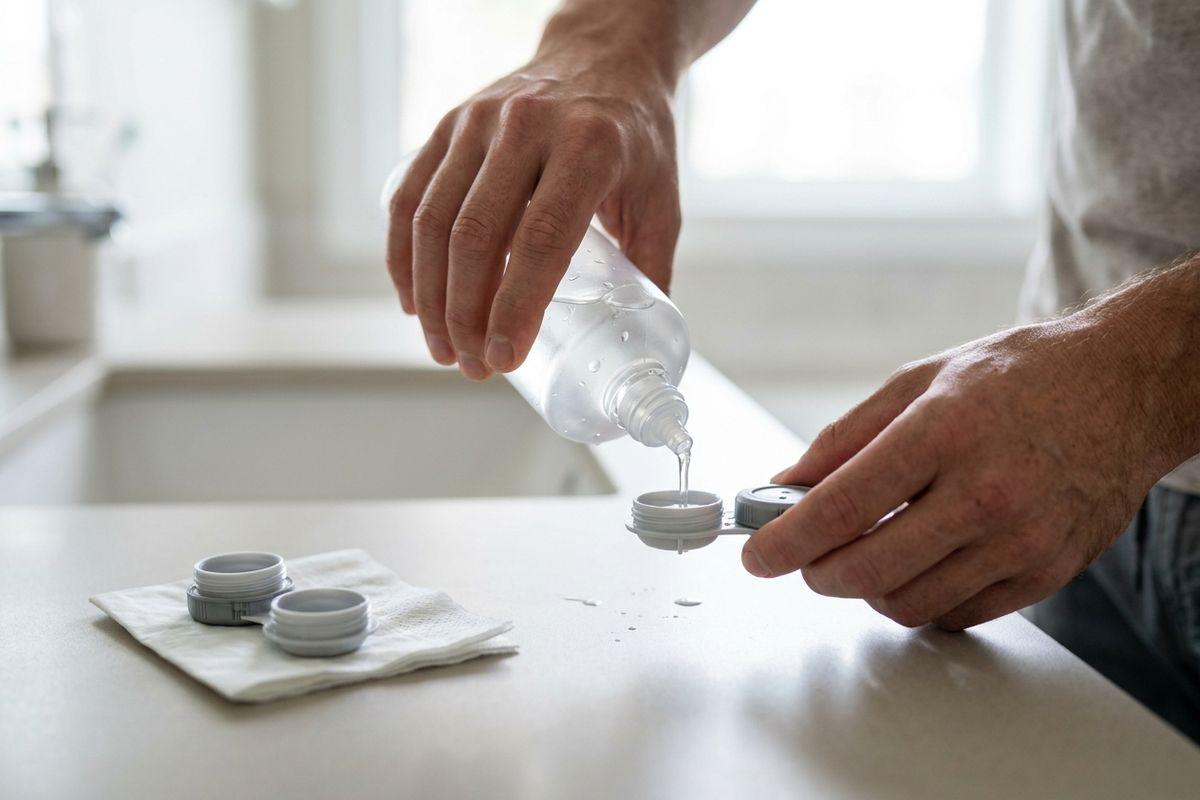
Rinse your case with fresh solution after each use, then set it upside down on a clean tissue to air-dry. Replace the case every 3 months.
Wear Habits That Put Your Eyes at Risk
Sleep and Overwear
Sleeping in lenses that are not made for overnight wear lowers the oxygen reaching your eye. Long days take their own toll, and by hour 15 you may notice dryness and irritation building. Take your lenses out before bed unless your eye doctor has specifically fitted you for overnight wear.
Water and Makeup
Remove your lenses before you shower, swim, or climb into a hot tub. If mascara flakes or foundation touches a lens while you’re getting ready, clean the lens with solution before it goes back in.
Missed Replacement Schedules
Daily lenses go in the bin at night, no rinsing, no second day. Biweekly and monthly lenses are easier to lose track of, so set a repeating reminder on your phone or mark the swap date on the family calendar.
Signs Your Eyes Need a Break from Lenses
Your eyes tend to speak up before a small irritation turns into something bigger. Take your lenses out and switch to glasses if you notice any of the following:
- Redness, itching, or burning.
- Blurred vision or new sensitivity to light.
- Watering, a gritty feeling, or discomfort that sticks around.
If the feeling doesn’t settle once the lenses are out, book an appointment rather than waiting it out.
How Our Team Helps You Wear Lenses Safely
Lens Fits and Options
A fit check looks at how your lenses sit on your eyes and how they hold up through your actual day, whether that’s a shift on your feet, screen work, or hockey practice with the kids. Daily disposables suit people who want a simpler routine, since there’s no case, no solution, and no replacement date to track.
Regular Eye Exams
Yearly checkups give our team a chance to review your prescription, assess the health of your eyes, and adjust your lens plan as your needs change.
You can book with a Duncan or Langford optometrist, and our clinic also welcomes anyone seeking an optometrist in Chemainus, Cobble Hill, or Lake Cowichan.
Come See Us
Cowichan Eyecare is here to help you wear your lenses comfortably and keep your vision in good shape. Call to book your next eye exam or contact lens fitting.